
A Quiet Way to Watch the Night
The first time Mark used night vision on his property, it wasn’t for curiosity.
It was because something kept moving near the chicken coop.

Every few nights, the dogs would bark. The hens would rustle. By the time he grabbed a flashlight and stepped outside, everything was still.
One night, instead of turning on the floodlight, he tried something different.
No bright beam.
No sudden glare.
Just a soft infrared glow invisible to the human eye — and within seconds, shapes began to form on the screen.
A raccoon. Calm. Unhurried. Completely unaware it was being watched.

That was the moment he realized:
Seeing the night doesn’t have to mean interrupting it.
Why Flashlights Change Everything
Anyone who has walked outside with a high-lumen flashlight knows what happens next.
Eyes reflect. Heads snap up. Animals freeze — or bolt.
Visible white light falls within the typical mammalian visual range of roughly 400–700 nanometers¹. It immediately alters behavior because it is, quite literally, daylight to them.
Digital night vision works differently.
Most consumer digital systems use near-infrared illumination around 850nm — just beyond the visible spectrum for humans and outside the typical sensitivity range of most mammals².
Studies in mammalian photoreceptor biology show that the majority of mammals lack sensitivity to wavelengths beyond ~700nm³.
That doesn’t mean animals have zero awareness of their environment — but it does mean infrared illumination does not function like a visible spotlight.

In practical terms:
- Livestock stay calmer during night checks
- Wildlife continues natural movement patterns
- Observation becomes passive rather than intrusive
Important note: At very close distances, some animals may detect a faint red glow from the emitter itself. Responsible distance is still recommended.
The Backyard After Dark
You don’t need to live on 100 acres to experience this. In suburban neighborhoods, entire ecosystems wake up after sunset. Raccoons navigate fence lines with practiced ease, owls scan open lawns from the safety of the oak trees, and foxes pass through unseen, utilizing the shadows as their highway. With digital night vision, these moments unfold without triggering panic responses.


Slide or use arrows to view more →
Who is using this technology today?
-
Parents: To show their children how different the yard feels at night and teach them about local nocturnal wildlife.
-
Farm Owners: To check movement near barns or coops without startling the animals or causing a stampede.
-
Nature Hobbyists: Simply to understand and document the species that share their living space.
The night becomes visible—but still undisturbed.
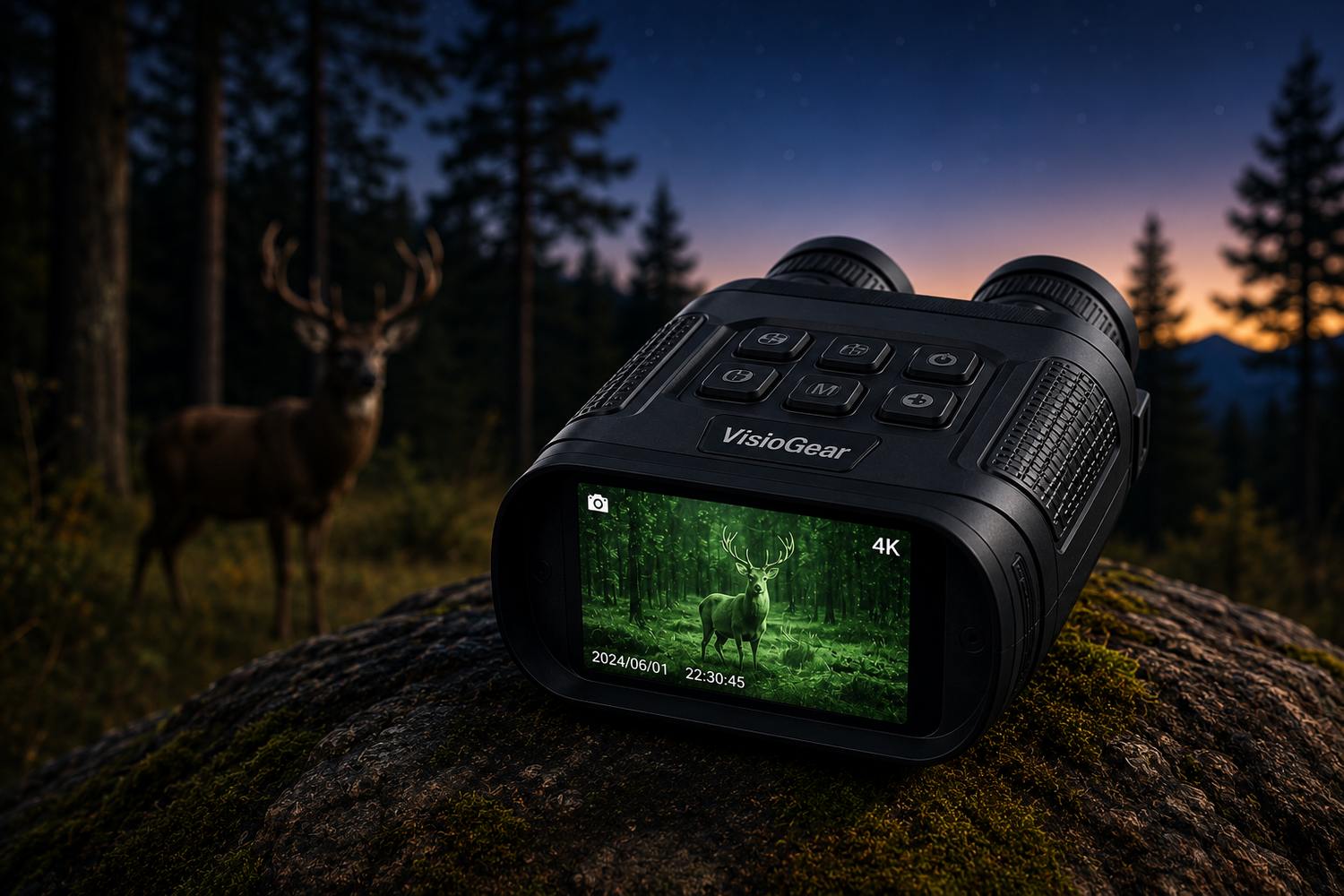
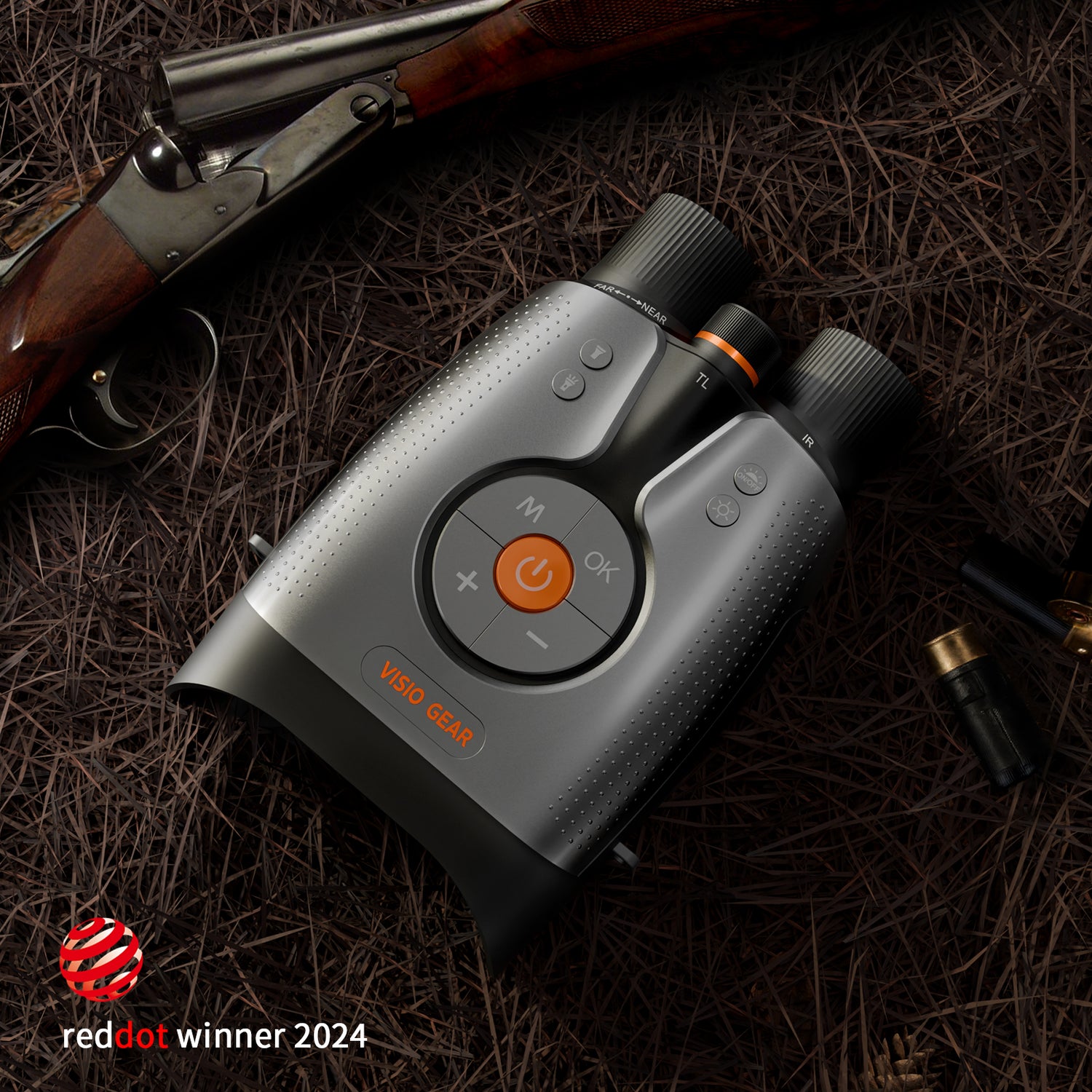
A Practical Tool: VisioGear X1
For this kind of use, simplicity matters more than tactical complexity.
The VisioGear X1 is built for:
- Quick, one-handed operation
- Clear 4K recording and 52MP resolution for reviewing what you saw
- Lightweight portability for walking fence lines or stepping into the yard
But it doesn’t stop there.
The X1 also features a full-color daytime mode, allowing it to function as a versatile observation device even before sunset. Instead of switching tools between day and night, users can rely on a single device across changing light conditions.
Its immersive viewing screen creates a more enclosed, binocular-style experience. Rather than staring at a bright, exposed display, the viewer’s eyes are naturally shielded, reducing outward light spill and minimizing the chance of startling nearby animals.
At the same time, this enclosed screen design enhances depth perception and focus, making the experience feel more engaging — closer to traditional binocular observation than looking at a phone screen in the dark.
It’s not laboratory equipment.
It’s not a military optic.
It’s a practical, consumer-grade tool designed for real-world property and wildlife observation.
And in many cases, that’s exactly what’s needed.

Seeing Without Forcing
Technology often makes us louder.
Brighter lights.
Stronger beams.
Longer distances.
But sometimes the better approach is quieter.
When observation becomes less intrusive, animals behave more naturally. And when behavior remains natural, what we’re witnessing is more authentic.
Night vision doesn’t replace patience.
It simply rewards it.
Practical Tips for Better Results
- Avoid pointing IR directly at nearby leaves or fence posts — close reflections can cause overexposure.
- Maintain respectful distance from dens, nests, or livestock.
- Use lower IR intensity when observing at shorter ranges.
Small adjustments make a noticeable difference in image clarity.
References
¹ Land, M.F., & Nilsson, D.-E. (2012). Animal Eyes. Oxford University Press.
² Cronin, T.W., et al. (2014). Visual Ecology. Princeton University Press.
³ Jacobs, G.H. (1993). The distribution and nature of colour vision among the mammals. Biological Reviews, 68(3), 413–471.
0 comments