
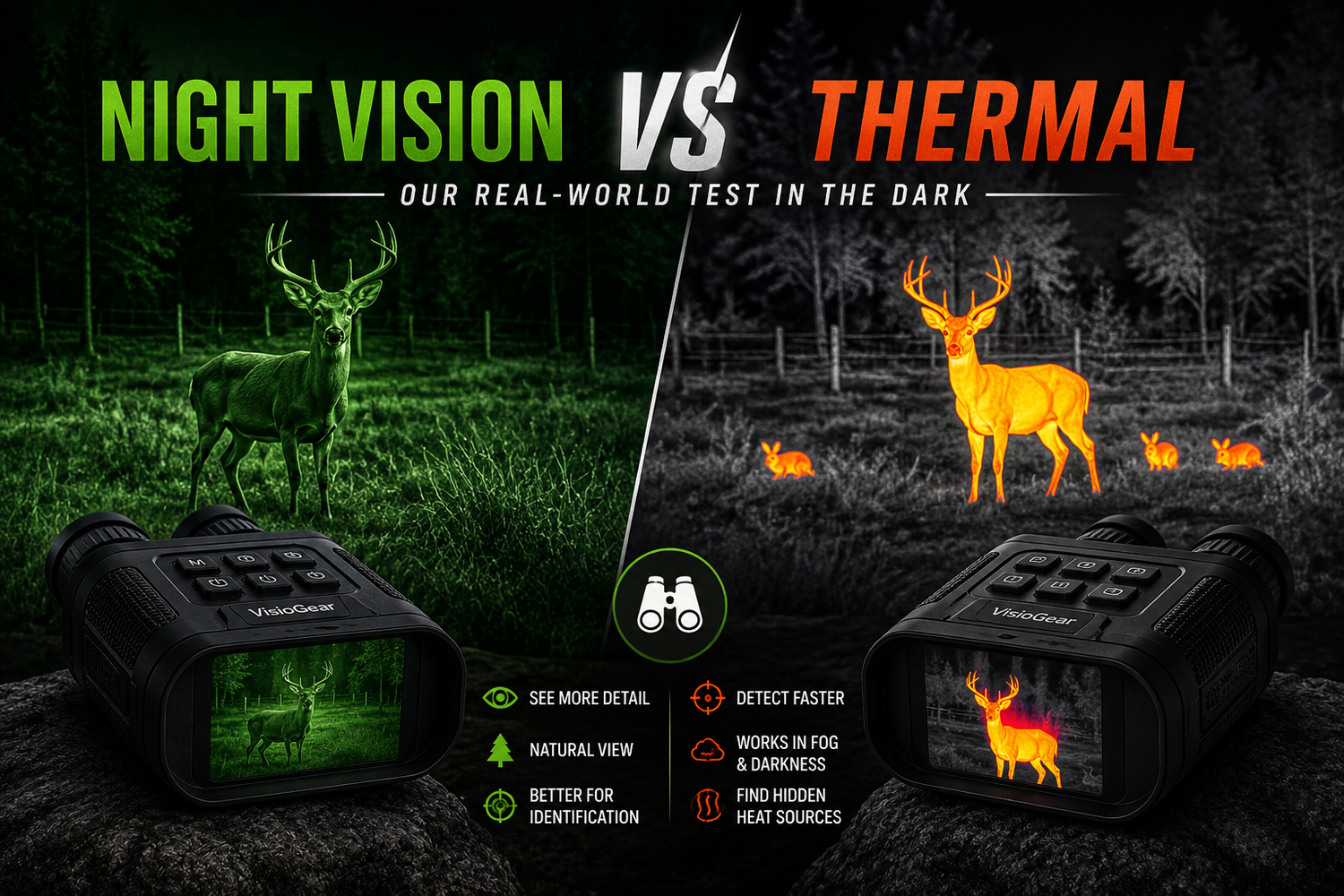
Whether you’re tracking wildlife in the woods with a thermal imager or watching over your campsite at midnight with night vision, the right tool makes all the difference. Over the past few months, we’ve put both night vision and thermal devices to the test in every kind of nighttime environment we could find—from quiet backyard fields to foggy forests, and even on chilly winter evenings when the moon refused to shine. What began as a simple curiosity—“Which one really works better?”—turned into a deeper exploration of how these two technologies actually complement each other. Here’s what we discovered through real nights in the dark.
Stepping Into the Night: Our First Encounter
The first night we tested, we brought both a digital night vision scope and a mid-range thermal camera to a nearby field.
The moon had just set, leaving the world in deep darkness. We switched on the night vision device first. Almost immediately, the field came alive:
- Shapes of trees emerged
- A deer grazing quietly by the fence became visible
- Even the subtle shimmer of frost on the grass was discernible
It felt like our eyes had been upgraded, letting us see the world as it actually looked — just brighter and more detailed.
Then came the thermal camera. At first glance, the same field seemed like a completely different place. Shapes were replaced by blobs of heat:
- The deer showed up as a distinct warm silhouette
- Hidden rabbits popped up as tiny heat spots in the brush
- Cold areas like the fence and ground receded into shadow
We could detect movement instantly, but it didn’t give us much of the scene’s texture. The scene looked like a map of heat, not a place to walk through.
Detection vs Identification: A Key Difference We Learned
After multiple nights of testing, one thing became very clear:
-
Thermal imaging excels at detection. If an animal or person was hiding in shadows or behind light cover, thermal picked it up quickly.
- Night vision is excel at identification. Once you’ve located a subject, night vision lets you see what it actually is: the kind of animal, its size, even subtle behaviors.
We tested this on a foggy evening. The thermal camera immediately picked out every warm shape, but only night vision allowed us to tell which were deer, which were rabbits, and which were stray cats.
That was the moment we realized these tools complement each other, but serve different purposes.
The Fog, The Rain, and The Unexpected Lessons
Not all nights were perfect. One evening, a light drizzle turned into fog. Night vision struggled. The camera struggled to pick up anything beyond a hazy blur. Thermal, however, cut through the fog effortlessly, highlighting warm bodies against the misty backdrop.
It was a lesson in choosing the right tool for the environment:
-
On clear nights with some ambient light → Night vision delivers more natural, detailed, and comfortable viewing.
-
In obstructed conditions (fog, rain, smoke, or complete darkness) → Thermal provides much greater reliability.
We also noticed that while modern digital night vision performs well with good IR illumination, it can still show noticeable noise and reduced clarity in extreme low-light or long-distance situations.
Cost vs Practicality: What We Really Thought
After several weekends of testing, we also considered price. High-quality thermal systems start around $1,000 and quickly rise. Meanwhile, modern digital night vision units cost a fraction of that, and delivered solid performance in most practical situations.
For backyard wildlife watching, camping, or general property surveillance, we found digital night vision offered an excellent balance of visibility and cost. Thermal imaging was undeniably impressive for detection, especially in challenging conditions, but for many casual users it can feel like overkill unless you specifically need its strengths.
Our Final Takeaways
-
Night vision is best when you want to see and understand your environment clearly — the image feels more natural and detailed.
-
Thermal is best when you need to detect hidden heat sources quickly, especially in difficult weather or zero-light conditions.
-
The two technologies complement each other well. The right choice depends on where you are, what you need to see, and how much you’re willing to spend.
In short, there is no single “better” tool — it all comes down to your specific use case.
After all these real-world nights, we now tend to reach for digital night vision as our go-to companion for most situations, while keeping thermal ready for those special scenarios that demand fast, reliable detection even when visibility is poor.
If you’re considering night vision or thermal devices, we strongly recommend testing them in the environments you actually use. Only hands-on experience will show you which one fits your needs best.
0 comments